


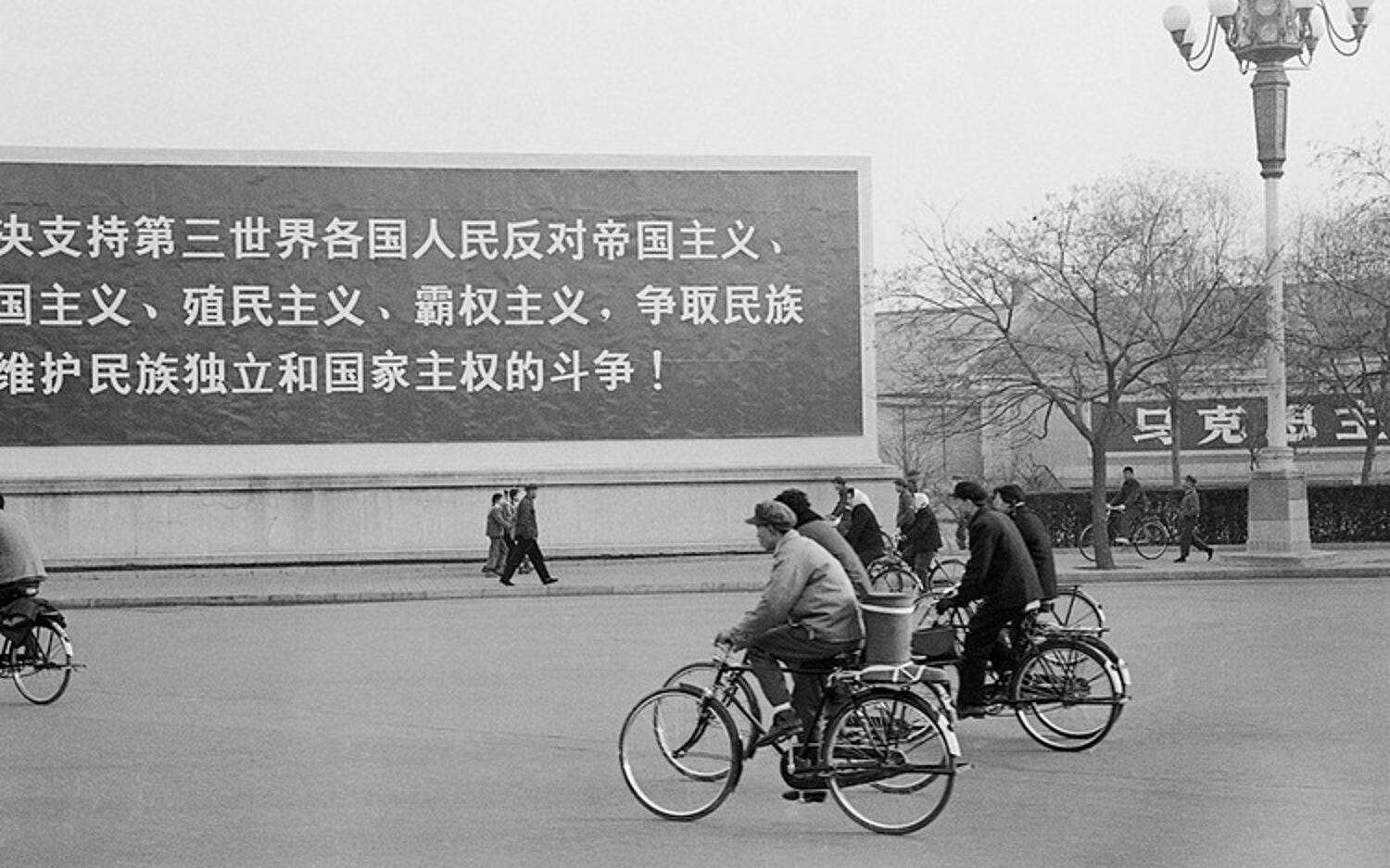
Travel back to 1970s China and the soundtrack of development was unmistakable: the metallic trill of bicycle bells echoing through streets as millions pedaled to work, school, and market. Cars were rare curiosities. Fast-forward half a century, and those gentle chimes have been drowned out by honking horns and the growl of engines stuck in gridlock. China has transformed itself into the world’s largest automobile market—a metamorphosis that seemed improbable for a country that, at the time, could barely be called industrialized.
The path from bicycles to Buicks was neither smooth nor entirely homegrown. Building cars demands sophisticated engineering prowess, particularly in perfecting the internal combustion engine—the heart of traditional automobiles. While German, American, and Japanese manufacturers spent generations mastering this craft atop robust industrial bases, China in the 1970s lacked both the expertise and infrastructure. Yet Chinese leaders grasped a fundamental truth: industrialization was the only route to prosperity.
Their solution was elegantly transactional, leverage China’s vast domestic market as bait for foreign investment. The formula, enshrined in countless joint ventures, was straightforward—”market for technology.” Foreign automakers like Volkswagen could access hundreds of millions of Chinese consumers, but only by manufacturing locally and, theoretically, transferring know-how to Chinese partners.
The reality proved more complicated. Foreign firms jealously guarded their core technologies, explaining why China never conquered traditional combustion engines and eventually leapfrogged to electric vehicles instead. Yet the joint-venture strategy succeeded in ways its architects might not have anticipated. It catalyzed industrialization, cultivated technical talent, and incubated homegrown champions like BYD, which has emerged as a global EV powerhouse.
Now the tables have turned. Canada stands poised to strike deals with Chinese automakers to produce EVs on Canadian soil for export worldwide. It’s China’s old playbook in reverse, and Canada is hardly alone in this pivot. Audi and Toyota have already formed joint ventures with Chinese EV manufacturers, a remarkable role reversal that would have seemed fantastical a decade ago.
The timing is driven by desperation as much as opportunity. Canada’s automotive sector faces an existential crisis, courtesy of Donald Trump’s “America First” manufacturing doctrine. Near-shoring, it turns out, isn’t enough; production must be American, full stop. This abrupt policy shift has devastated Canadian auto manufacturing, particularly in Ontario, where the industry has deep roots.
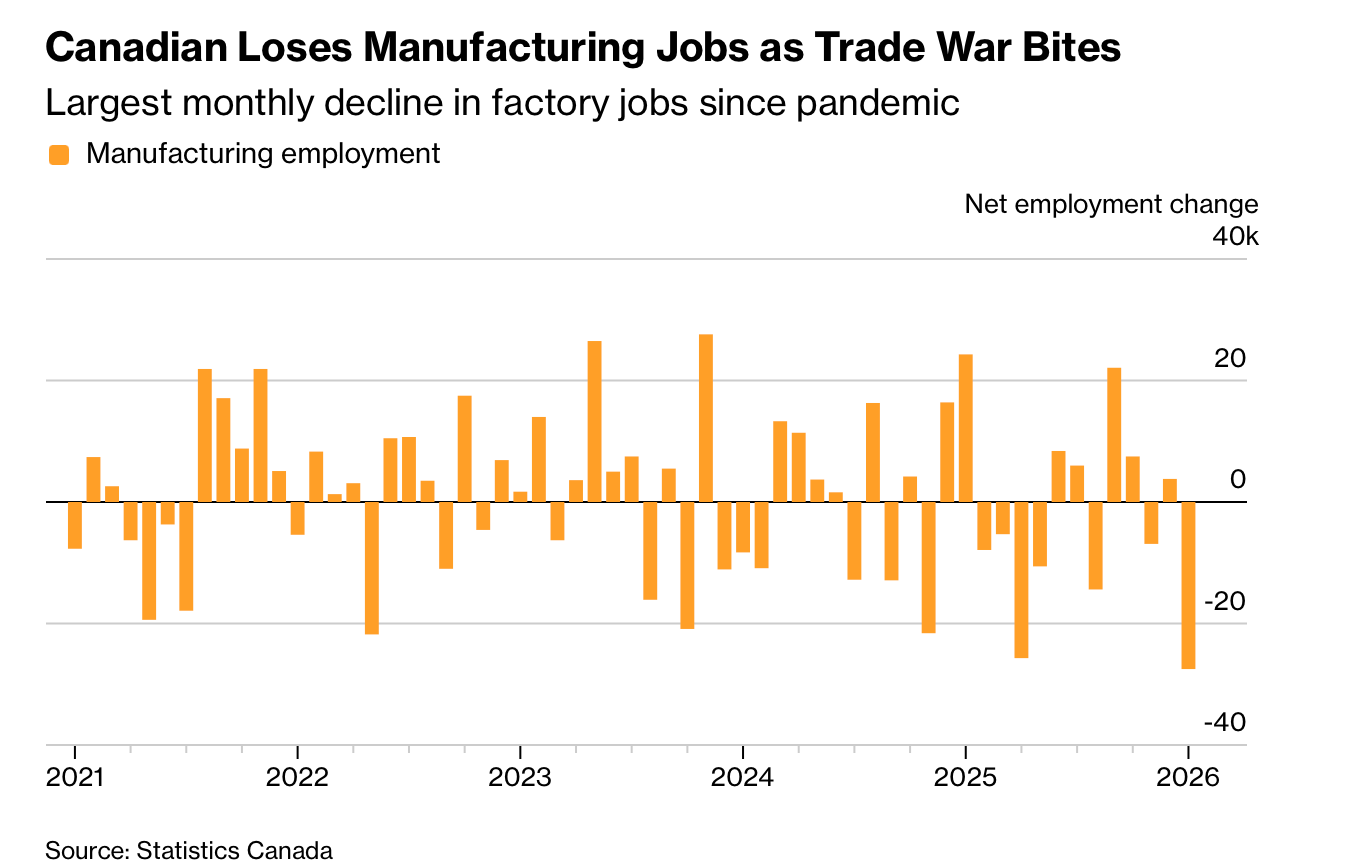
The hemorrhaging is severe. February 2026 employment figures showed 51,000 jobs lost nationally, with Ontario bearing the brunt. Stellantis has already relocated Jeep production from Brampton back across the border. Unlike the gradual decline of Detroit or Flint, where manufacturing erosion unfolded over decades, Canada’s crisis has arrived with shocking velocity. Tens of thousands of workers face uncertain futures, and an entire industrial ecosystem teeters on the brink.
Enter China—and potentially South Korea. A joint-venture strategy addresses Canada’s predicament on multiple fronts. First, industrial survival. Partnering with Chinese firms (and possibly Korean manufacturers like Kia) preserves Canada’s automotive manufacturing capacity. Without such deals, much of the sector risks vanishing entirely, as American consumers, and American policy, aren’t returning.
Second, consumer economics. Chinese EVs could help tackle Canada’s affordability crisis while advancing climate goals. Chinese manufacturers excel at producing feature-rich electric vehicles at accessible price points, giving Canadian consumers more choice and spurring competition. Lower prices for cleaner cars isn’t merely good policy, it’s good politics.
Third, technological transfer. Just as foreign automakers inadvertently seeded Chinese industrial capacity, joint ventures could expose Canadian firms, in software, manufacturing, and battery technology, to cutting-edge EV expertise. This matters particularly because Canada has struggled to participate meaningfully in recent technological revolutions. Knowledge diffusion through trade partnerships could invigorate Canadian innovation while diversifying economic ties beyond an increasingly unreliable southern neighbor.
Prime Minister Mark Carney’s government frames these discussions as part of a broader strategic reorientation. Talks encompass not just China but also South Korea, another EV and manufacturing powerhouse. The goal is explicit, to reduce dependence on American markets and integrate more deeply with dynamic Asian economies.
At Davos this year, Carney warned that global trade faces a “rupture.” His response has been characteristically pragmatic: diversify partnerships, court Asian investors, and rebuild Canada’s industrial base one deal at a time. Whether this represents visionary statecraft or merely making the best of a bad situation depends largely on execution.
Critics, including Ontario Premier Doug Ford, have raised concerns about Chinese EV imports. Yet joint ventures attract less scrutiny than finished imports, perhaps because they promise jobs and investment rather than displacement. The question is whether Canada can avoid China’s historical frustration, gaining factories but not fundamental technological capability, or whether, in an EV world where China already leads, some knowledge transfer is inevitable.
The irony is rich. Canada now plays China’s role from the 1980s, offering market access and manufacturing capacity in hopes of technological spillovers. Whether this gambit succeeds may determine whether Canadian automotive workers hear the ring of factory bells or the silence of shuttered plants.